

Automatic Driveway Gates: Types, Costs and a Buyer's Guide for the Bay Area
Everything a Bay Area homeowner needs before ordering an automatic driveway gate. Specifically, swing versus sliding, iron versus wood, what it costs, which openers and intercoms we install, and how to keep the gate safe for the next twenty years.
CA Contractor Lic. #1060180. Serving Santa Clara, San Mateo, San Francisco, Alameda, Contra Costa and Marin counties since 2017.
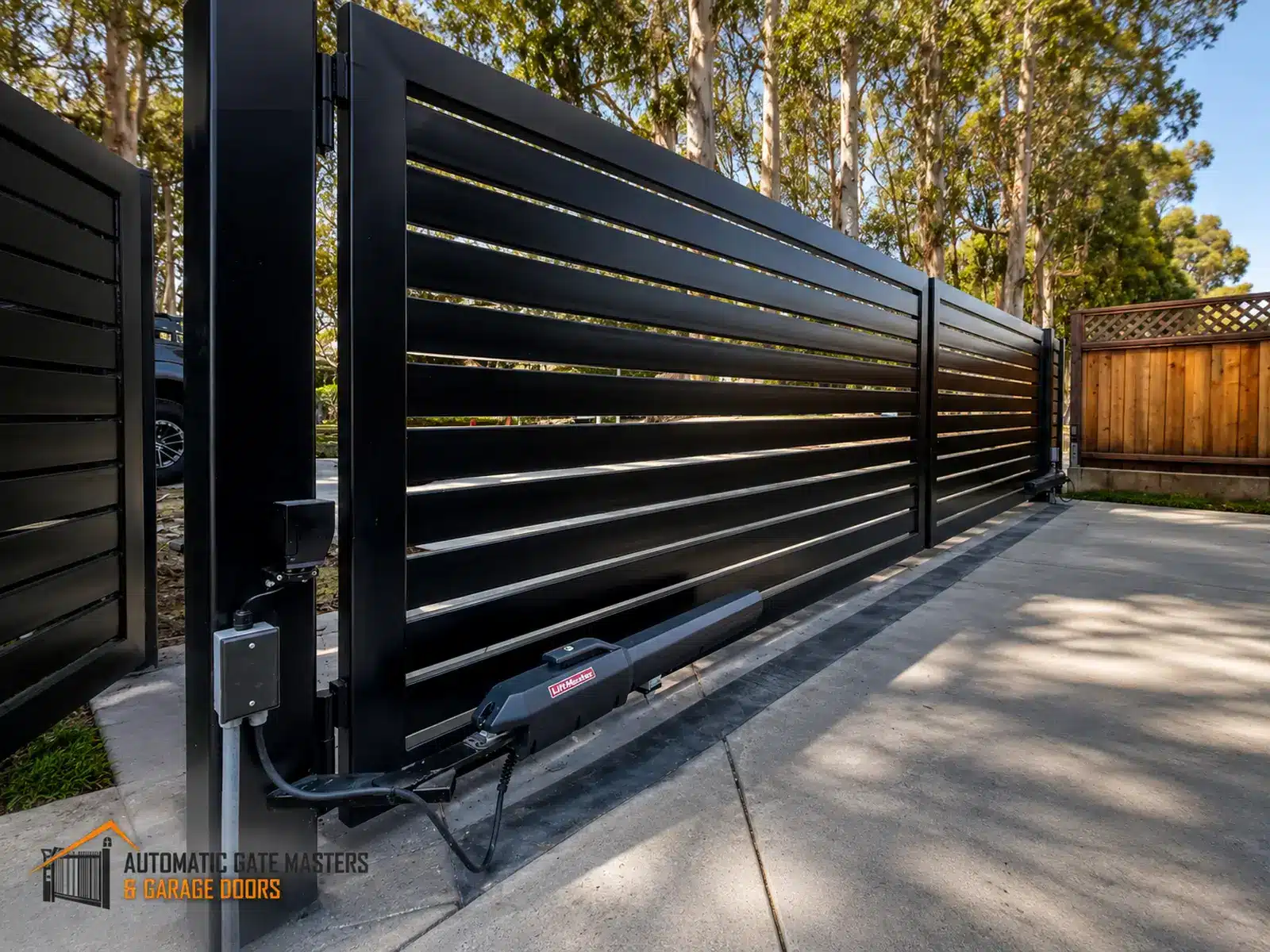
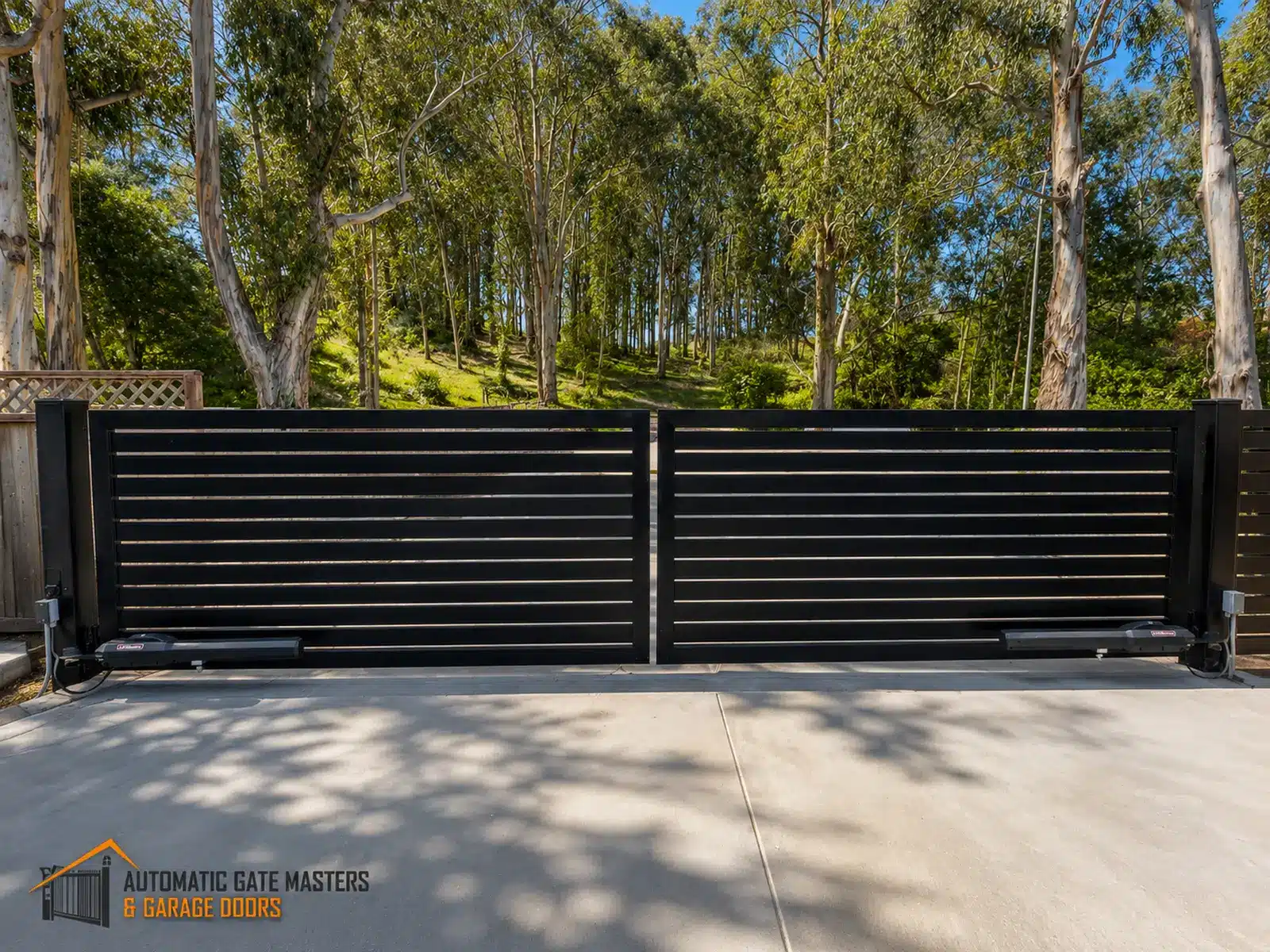 Burlingame, a dual swing gate with two LiftMaster LA500 operators
What an Automatic Driveway Gate Is
An automatic driveway gate is a motorized entry gate at the mouth of a residential or commercial driveway. A gate operator opens and closes it on command from a remote, keypad, intercom or smartphone app, so nobody has to get out of the car. In short, it combines a physical barrier with controlled access.
Basically, every project comes down to five decisions: swing or sliding, which material, which opener, what access control, and how the gate stays safe and maintained. Because each choice affects the others, this guide walks through them in order, and then covers cost, permits and the installation process. Automatic Gate Masters has installed thousands of gates across Santa Clara, San Mateo and the wider Bay Area since 2017, so the examples here are our own projects.

Swing Gates vs Sliding Gates
Generally, the two main types of automatic driveway gates are swing gates and sliding gates. Basically, the driveway chooses for you. A swing gate needs room inside the property for the leaves to open, while a sliding gate needs room along the fence for the gate to travel. In practice we look at slope, width and run-back before anything else.
The three configurations we install most
 Most popular
Dual swing gate
How it works. Two leaves hinge on the posts and open inward, with one arm operator per leaf. For example, this Burlingame gate runs on two LiftMaster LA500 operators.
Where it fits. Level or gently sloped driveways from 10 to 20 ft wide, and especially homes that want a classic estate entrance.
 Best for hills
Sliding V-track gate
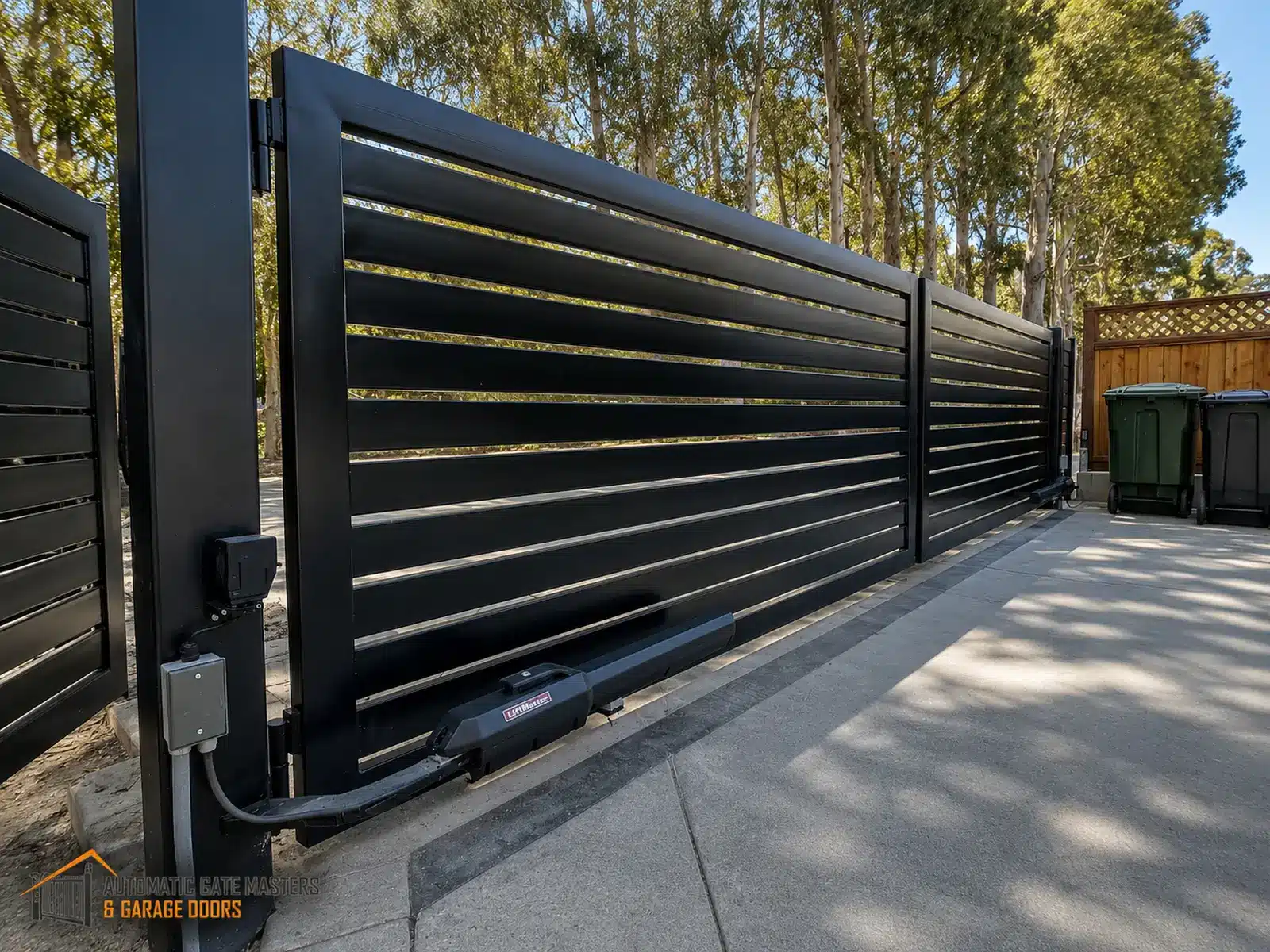
How it works. First, the gate rolls on wheels along a steel track set across the driveway, pulled by a chain-drive operator at the fence end. Specifically, this Los Altos Hills gate uses a LiftMaster CSL24UL.
Where it fits. Sloped driveways, short driveways where a leaf would hit a parked car, and also wide openings over 20 ft.
 No ground track
Cantilever sliding gate
How it works. Instead, the gate hangs from rollers on posts along the fence and never touches the ground, so there is no track to clear of leaves and gravel.
Where it fits. Driveways that cross a slope or a drainage path, as well as commercial entrances. See our sliding gate options.
Side-by-side comparison
| Feature | Swing gates | Sliding gates |
|---|---|---|
| Opening style | Inward or outward on hinges | Horizontally along a track or cantilever rollers |
| Best driveway | Flat or gentle slope | Steep hills, short or tight driveways |
| Space needed | Clear arc inside the gate for each leaf | Run-back room along the fence, at least as long as the opening |
| Typical width | Up to about 20 ft as a dual swing | Up to 40 ft and more |
| Wind resistance | Moderate, so solid panels need larger operators | Excellent, because the gate is supported along its length |
| Typical operator | Linear arm per leaf, for example LiftMaster LA500 | Chain-drive slide operator, for example LiftMaster CSL24UL |
| Maintenance | Low, mainly hinge and arm lubrication, so a quick quarterly task | Moderate, because the track and rollers must stay clean |
See both types in motion
Specifically, these three clips from our own installs show a full-privacy swing gate in Palo Alto, a laser-cut sliding gate in Los Altos Hills, and a decorative dual swing in Atherton.
Solid swing leaves need more operator force, so this pair runs on FAAC operators.
The gate travels along the fence line, so the sloped driveway stays clear.
Ornamental dual swing leaves, each driven by its own LiftMaster operator.
Wrought Iron, Steel or Wood
Generally, we fabricate driveway gates in three materials: wrought iron, steel and wood, plus steel frames with modern infill such as frosted acrylic. For a weathered rust finish, see our Corten steel gates guide, built around a real Fremont project. Each one trades differently between look, weight, maintenance and price, so the material decision also shapes the opener decision later on.

Wrought iron
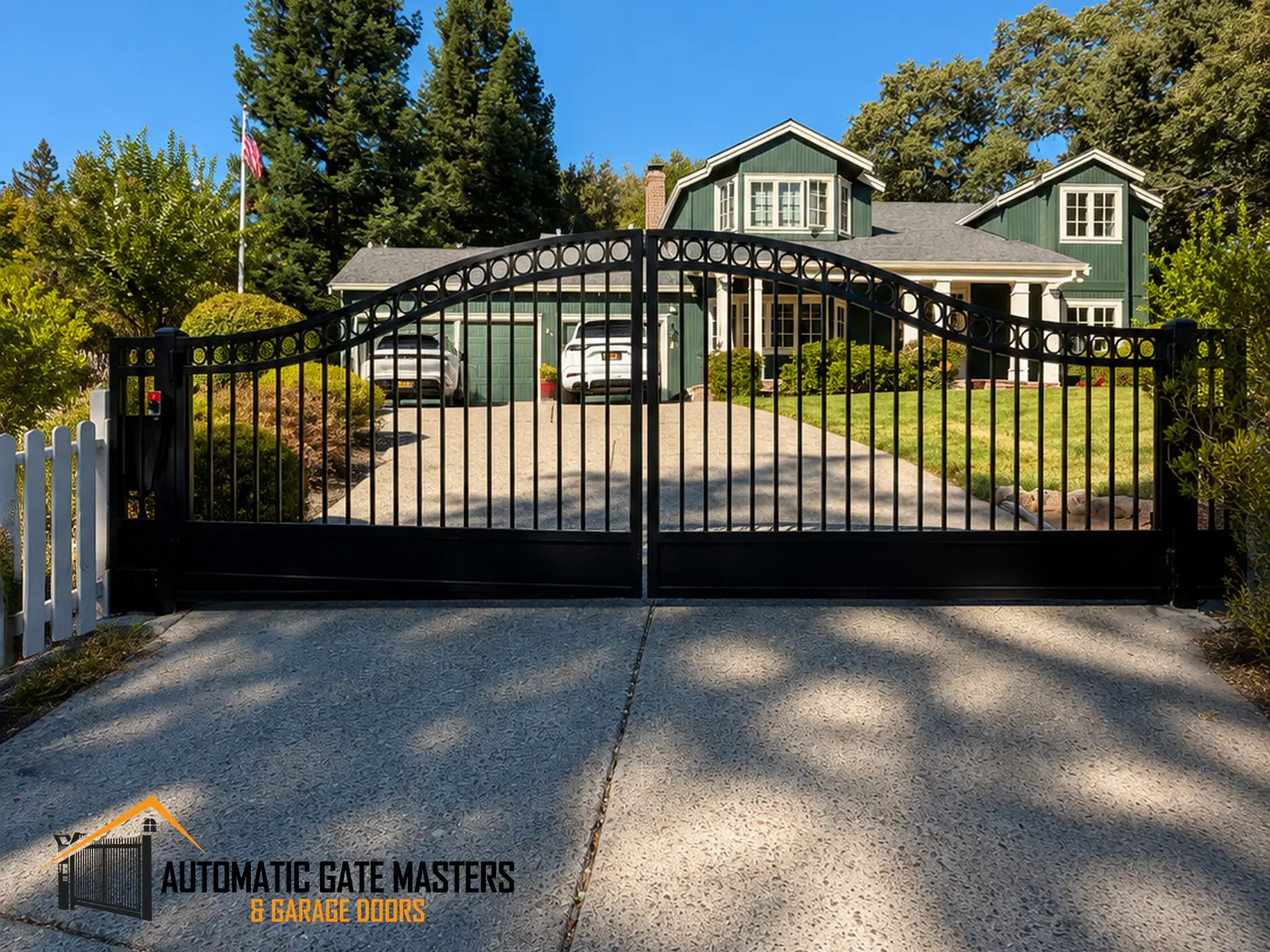
Ornamental scrollwork and arched tops for estate-style homes, for example this Los Altos Hills gate. Extremely durable, although it needs periodic rust prevention at welds and joints.
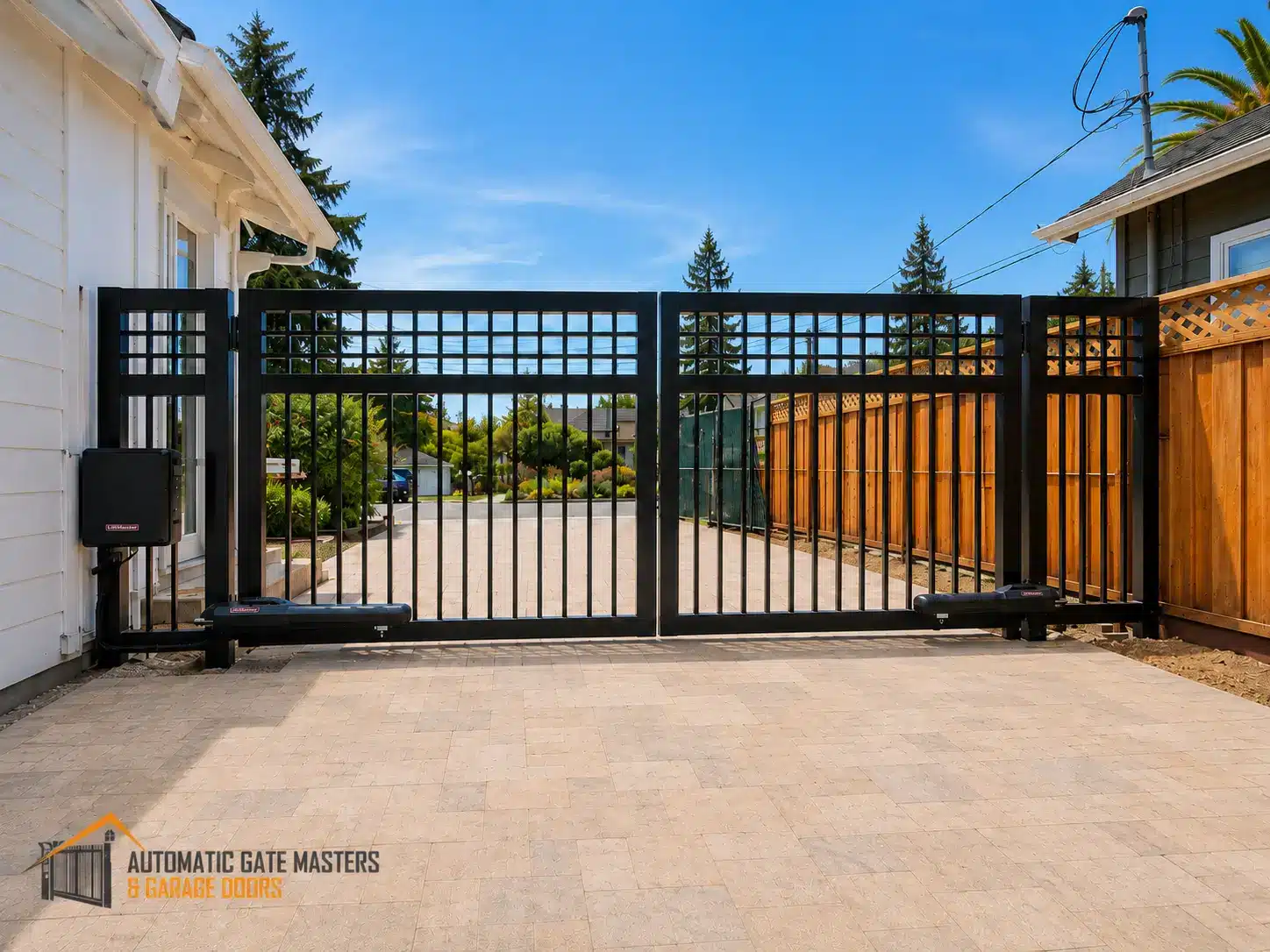
Steel
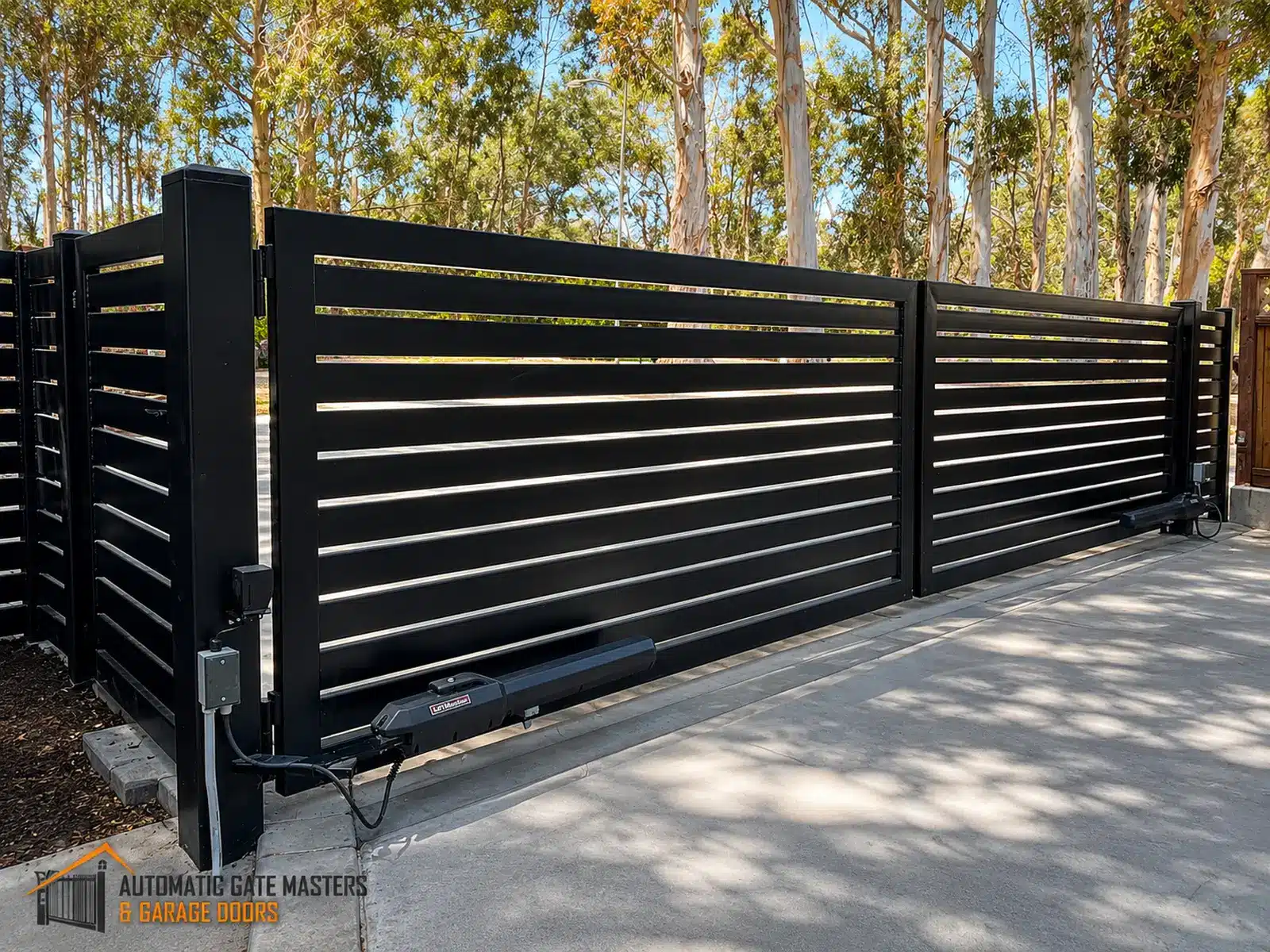
Powder-coated steel in pickets, slats or grid patterns, for example this Campbell gate. In addition, steel is the most cost-effective choice for large and commercial gates.
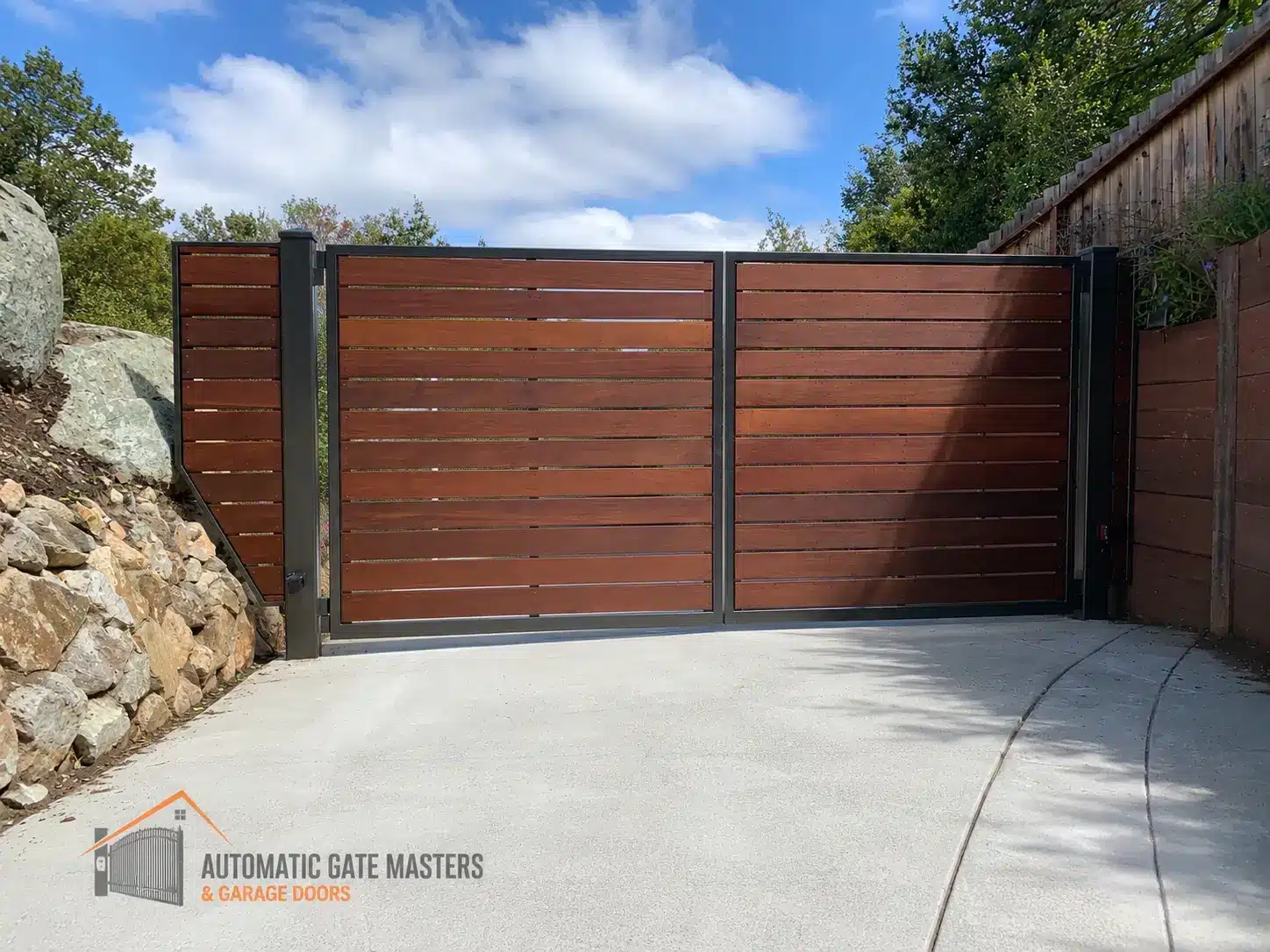
Wood
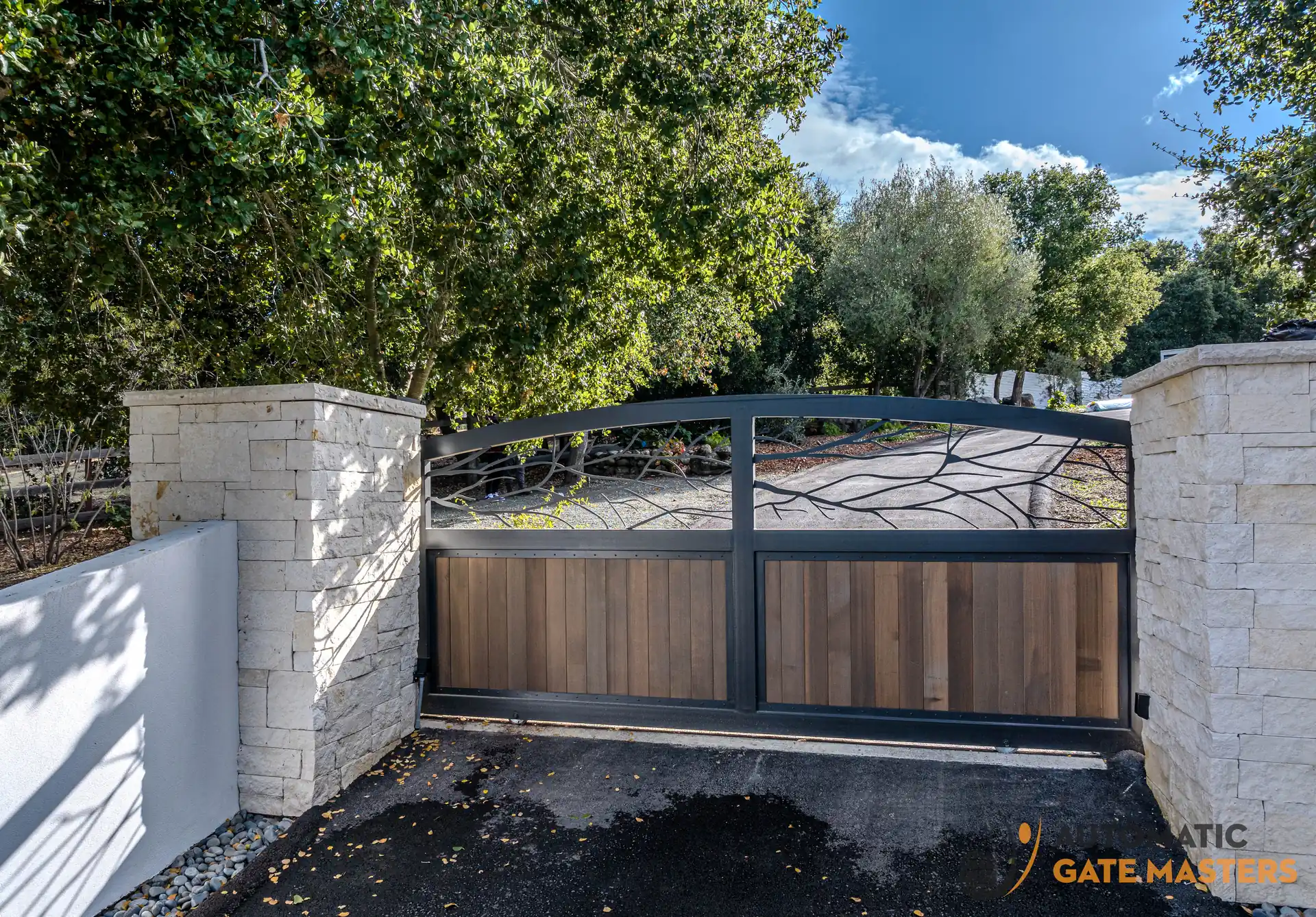
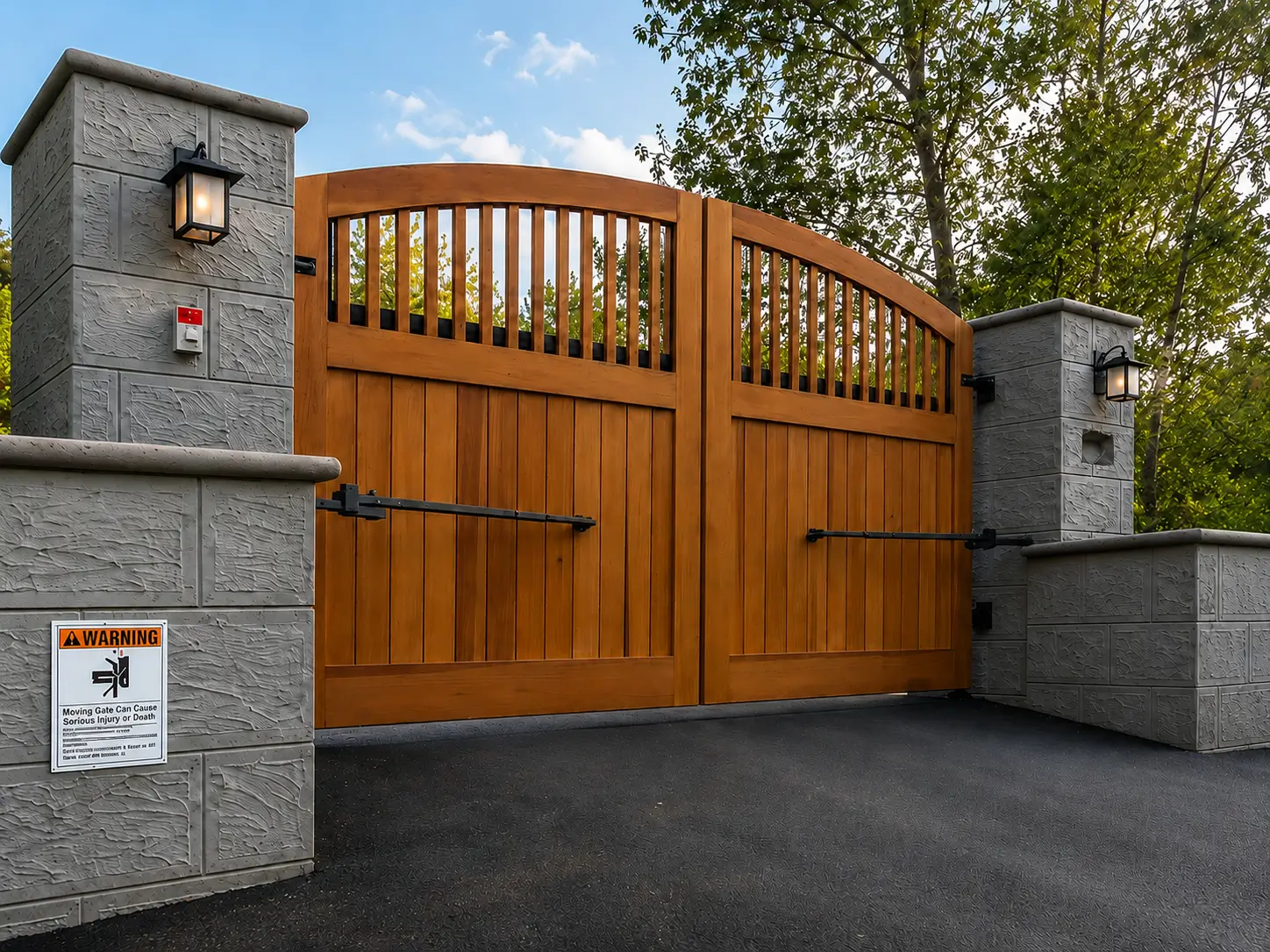
Ipe, cedar or redwood on a concealed steel frame, for example this Emerald Hills Ipe gate. Wood gives full privacy and a natural look, but it also needs staining or sealing on a schedule.
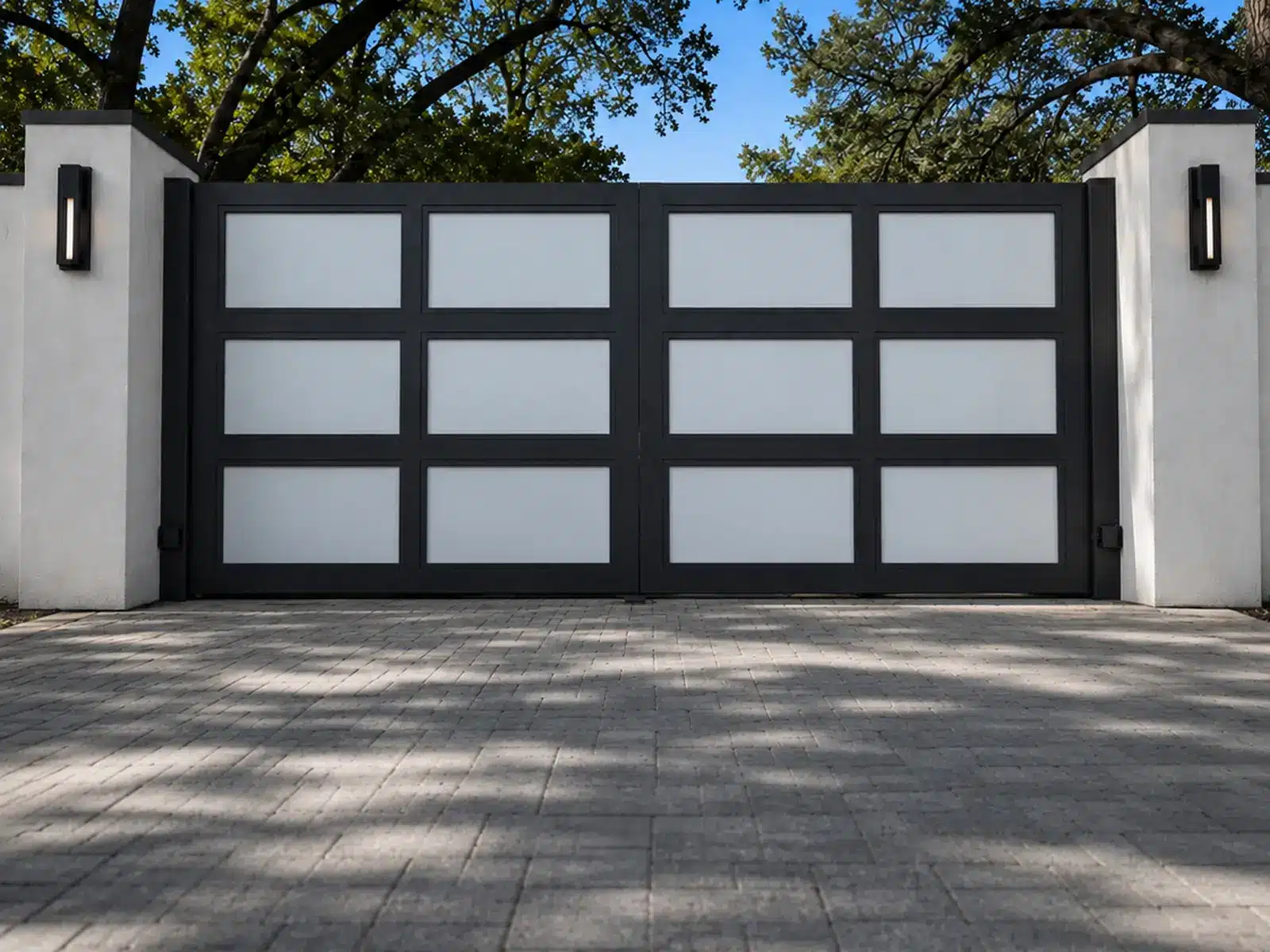
Steel with modern infill
A dark steel frame holding frosted acrylic, horizontal slats or laser-cut panels, for example this Atherton gate. Light passes through, while the view stays private.
Materials compared
| Material | Durability | Maintenance | Typical installed range | Best for |
|---|---|---|---|---|
| Wrought iron | Excellent | Moderate, rust prevention every year or two | $8,000 to $15,000+ | Estate homes and ornamental designs |
| Steel | Excellent | Moderate, so touch up the coating as needed | $5,000 to $10,000 | Security, commercial and large gates |
| Wood on steel frame | Good | High, staining or sealing every one to three years | $7,000 to $14,000 | Privacy and natural or rustic styles |
| Steel with acrylic or slat infill | Excellent | Low, so occasional washing is enough | $8,000 to $15,000 | Modern and contemporary homes |
Ranges above are typical Bay Area figures from our recent projects, including the opener, posts, hardware and safety devices on a standard residential driveway. Custom sizes, matching pedestrian gates and side panels add to any of them. For design ideas, browse our driveway gate ideas gallery with 25 real Bay Area gates, and then see our wrought iron gates and custom gate design pages.
Why material weight matters for the opener
A solid wood or acrylic leaf catches wind like a sail, while a long wrought iron leaf is simply heavy. As a result, both load the hinges and the operator every cycle. For that reason we size the operator above the bare gate weight, and on heavy leaves we specify operators rated well past the gate's dimensions. On top of that, a heavy gate needs steel posts set in reinforced concrete, because a post that leans by half an inch throws the whole gate out of alignment. The Emerald Hills gate on the right shows the concealed frame and the custom side panel that carry that load.

How Much an Automatic Driveway Gate Costs in the Bay Area
In practice, gate installation costs in the San Francisco Bay Area depend on the gate type, the material, the driveway and the access control you add. The figures below are typical ranges from our recent projects, so treat them as a planning guide. We confirm the exact number with a free written estimate after a site visit.
First, a standard steel swing gate with posts, hardware, opener, remotes and UL 325 safety devices on a typical residential driveway. Custom iron and wood gates run higher, as the materials table shows.
Operator, control board, monitored safety devices, remotes and programming, as long as the existing gate and posts are sound.
Finally, keypads, video intercoms, cellular entry, exit loops and smart-home integration, priced by the hardware you choose.
What moves the price
- Gate size and type. First, wider gates, dual swings and sliding gates with track or cantilever hardware cost more than a single swing leaf.
- Material. Then, wrought iron and custom wood take longer to fabricate and finish than standard steel, and ornamental detail adds shop time.
- Driveway slope and terrain. Hillside driveways in Los Altos Hills, Saratoga, Woodside and Alamo often need outward-opening leaves, custom track work or grading, like the sloped Alamo driveway on the right.
- Power. Then there is power. Trenching conduit from the house to the gate is often the largest single variable, which is also why solar gate openers make sense on long driveways.
- Access control. Remotes are included, while video intercoms, keypads, apps and loops add hardware and wiring.
- Permits and electrical. Finally, most Bay Area cities require a permit, and the operator's power circuit is electrical work that we include in the estimate.

Want a number for your driveway? Send us the opening width, a photo from the street and the gate style you like. We will tell you the realistic range before anyone comes out.
Which Gate Openers Are Best in 2026
The gate opener, also called the gate operator, is the motor and control board that moves the gate. We install the four brands below, and in addition we service DoorKing, Elite and Mighty Mule systems. The right one depends on the gate type, its weight and length, how many cycles it sees each day, and whether you want battery backup or solar.
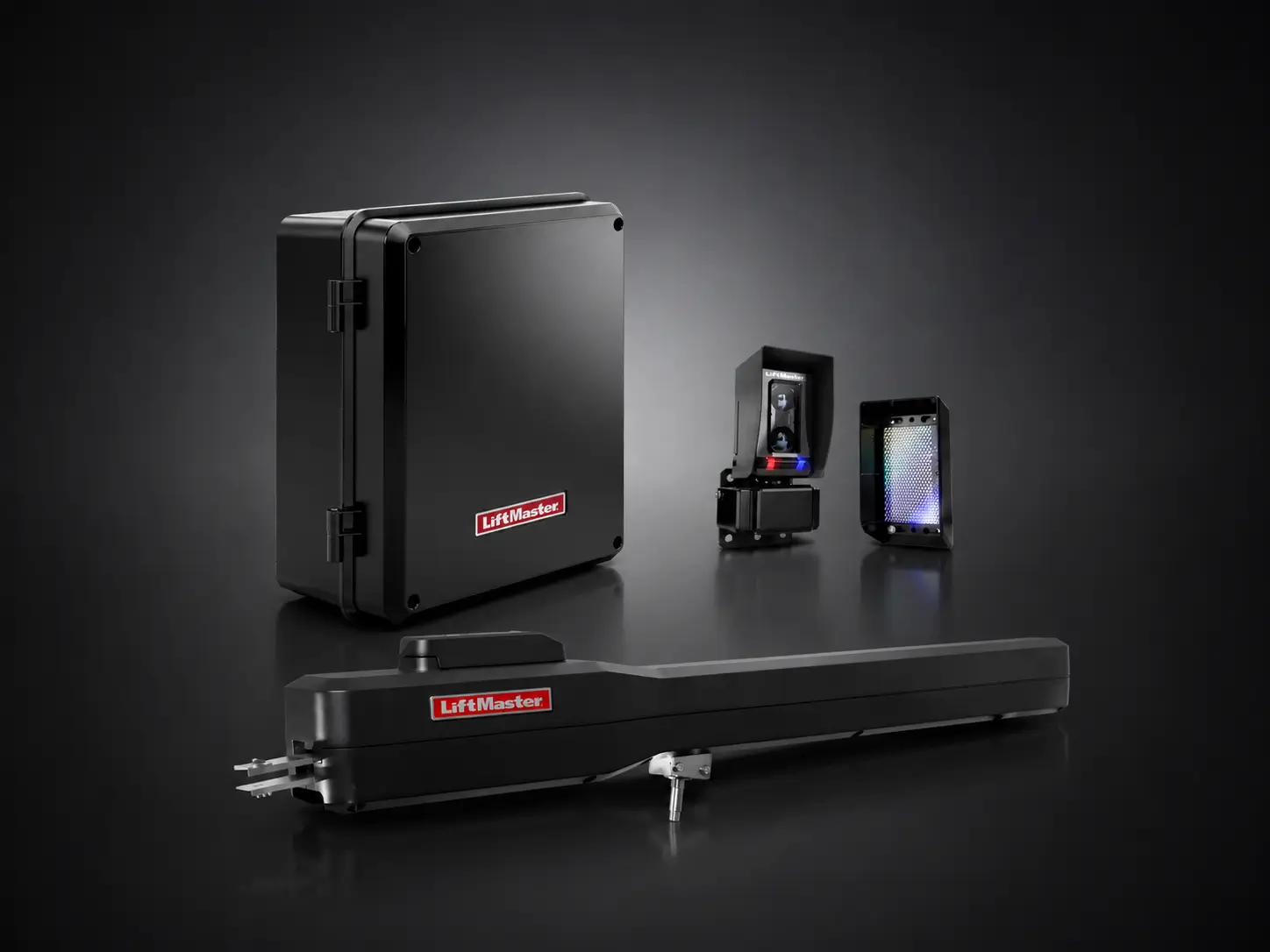
LA500 swing
The residential swing operator we install most. Specifically, a linear arm, 24 VDC with battery backup, myQ app connectivity and Security+ 2.0 remotes. Two units run a dual swing gate.

CSL24UL slide
Chain-drive slide operator for gates up to 1,500 lb and 50 ft, and also continuous duty with battery backup. Our sliding gate opener buyer guide compares it with the Viking models.
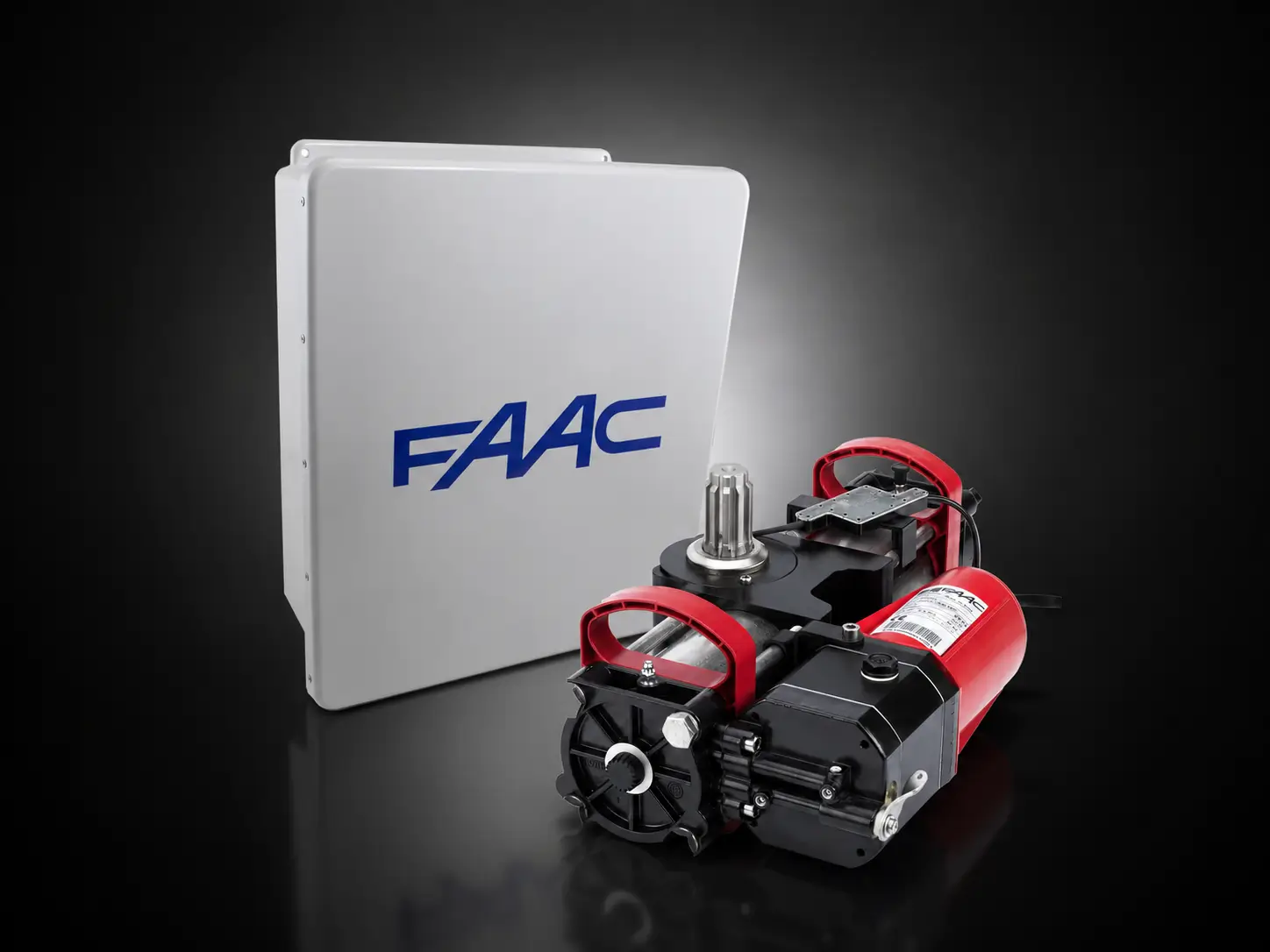
S800H underground
Italian hydraulic operator that hides below grade at the hinge, so nothing shows on the gate. Therefore it is the choice when the look of the gate matters most.
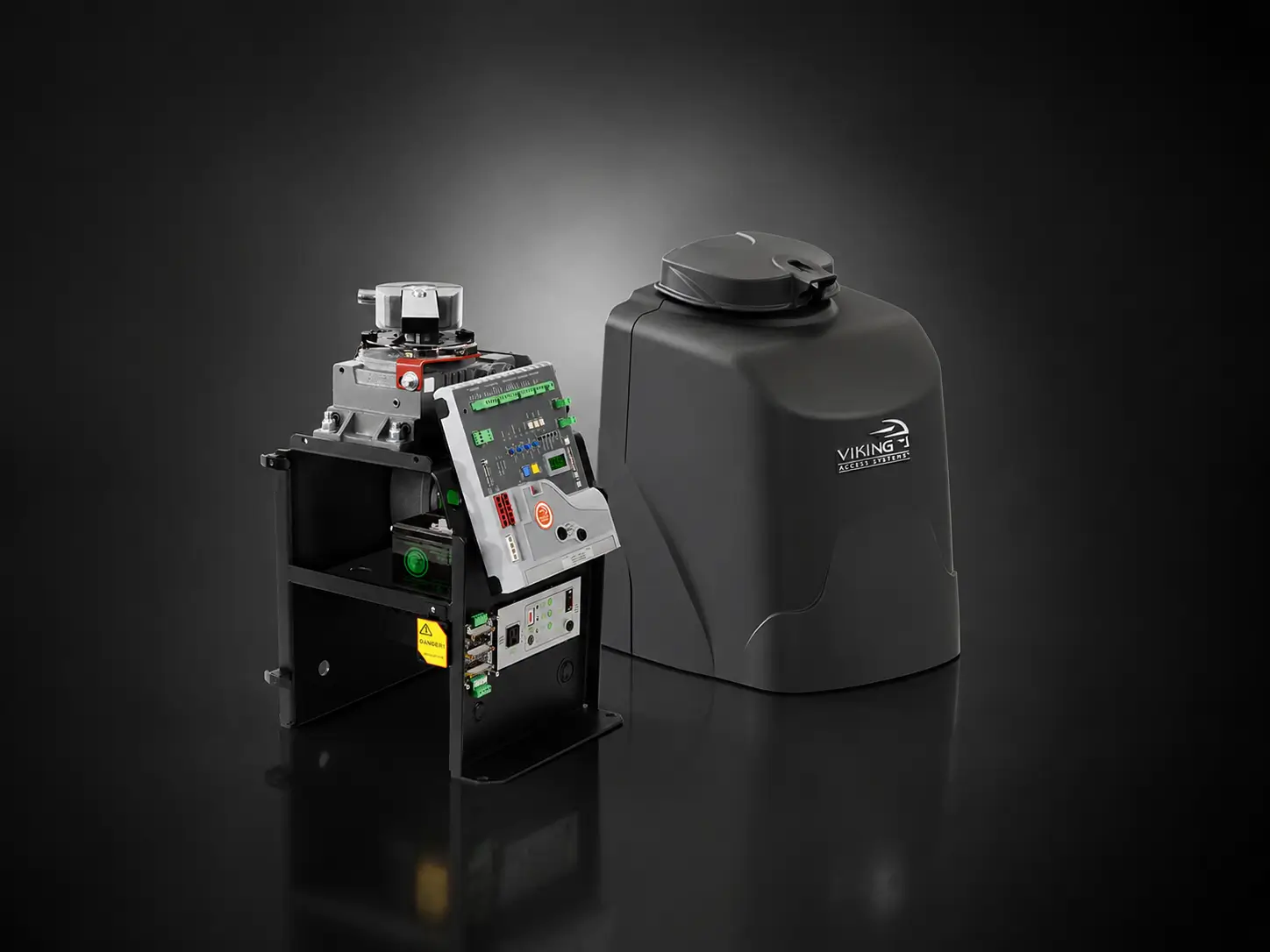
F-1 swing
Electromechanical 24 VDC operator with true battery backup as standard, and in addition the VFlex board that shows diagnostics on its own LCD. Likewise solar-compatible.
Features to insist on
- Battery backup. First, the gate keeps working through public safety power shutoffs and winter storms.
- UL 325 monitored safety. Second, photo eyes and edge sensors that the operator checks every cycle, in addition to its own obstruction sensing.
- Smartphone control. Then myQ on supported LiftMaster operators, or an intercom app, for opening and status from anywhere.
- Solar compatibility. A DC operator the manufacturer lists as solar-ready, especially if power is far from the gate. See our solar automatic gate systems page.
- Duty cycle. Residential gates see 10 to 30 cycles a day, whereas shared entrances see hundreds, so the operator must be rated for it.
- Manual release. Finally, a keyed release so the gate can be opened by hand during a failure.
For more detail, see the brand pages: LiftMaster, Viking, FAAC and HySecurity for commercial sites. The automatic gate openers overview covers every brand we service.
Smart Access Control for Your Driveway Gate
The opener moves the gate, while access control decides who can tell it to. Instead of relying on remotes alone, a modern system lets you open from your phone, issue temporary codes for guests and deliveries, and see who is at the gate before you open it. In practice, most driveway gate projects combine a few of these:

Remotes, keypads and fobs
First, rolling-code remotes for the family, a wireless keypad at the driveway with unique codes for housekeepers and gardeners, and also a free exit loop so cars leaving never have to stop.

Video intercoms
Then see and talk to a visitor from your phone, and open the gate. We install DoorBird, CellGate, Ubiquiti and LiftMaster intercoms, over Wi-Fi, cellular or wired connections. See gate access control systems.

Smartphone and smart home
Open, close and get alerts from an app, and in addition connect the gate to Alexa, Google Home or HomeKit on supported systems. Our remote access guide compares the options.
Finally, for a deeper comparison of cellular, Wi-Fi and wired systems, read our residential gate access control systems guide.
Safety, Permits and Professional Installation
Basically, an automatic gate is a moving machine that weighs several hundred pounds, so safety is not optional. For that reason, gate operators sold in the United States are listed to the UL 325 standard, which since 2016 requires two independent means of entrapment protection in every zone where the gate could trap a person.
- Inherent sensing. First, the operator itself senses an obstruction and reverses.
- Monitored photo eyes and edges. Second, external devices covering the open and close zones, which the operator checks at least once per cycle. If one is missing or failed, the gate will not run in that direction.
- Manual release and signage. In addition, every automated gate needs a manual release for emergencies and warning signs on both sides.
- Timer to close. Finally, the gate closes after a set interval so it is never left open by accident.

Permits and local code
In addition, most Bay Area cities regulate gate height and setback in the front yard, and the operator's power circuit is electrical work that needs a permit. For example, San Jose limits fences and gates in the front setback and requires clear sight lines at the driveway, while hillside towns such as Woodside and Hillsborough review entry gates for design and fire access. Because the rules differ by city, we cite the real municipal code on each of our city installation pages, such as San Jose and Palo Alto, and we pull the permits as part of the job.
How a typical installation goes
- Free consultation. We visit the property, measure the opening, check the slope, the run-back and where power is, and then write a detailed estimate.
- Design and permits. Then we settle the style, material and opener, and handle the city permit and any HOA review.
- Fabrication and installation. After that, steel posts go into reinforced concrete, the gate is hung and aligned, and the operators, safety devices and access control are wired. Most installs take one to two days on site.
- Testing and training. Finally, we run obstruction tests in both directions, program remotes and codes, demonstrate the manual release, and explain the maintenance schedule.
Sources for the safety section: LiftMaster Builder Knowledge Center, UL 325 guidelines and DASMA Technical Data Sheet 353, UL 325 entrapment protection.
Maintenance and When to Call for Repair
In addition, regular maintenance keeps the gate safe and extends the life of the operator by years. Specifically, these are the checks every gate owner should keep on the calendar:
| Task | How often | What to do |
|---|---|---|
| Lubricate moving parts | Every 3 months | First, silicone lubricant on hinges, arm pivots, rollers and chains. On sliding gates, also sweep the track clear. |
| Test the safety sensors | Monthly | Place an object in the path, and then the gate should stop and reverse at once. If it does not, clean and realign the photo eyes. |
| Check electrical and battery | Every 6 months | Look for frayed wires or corrosion at the control board, and then test the battery backup. Batteries generally last two to three years. |
| Tighten hardware | Every 6 months | Hinge bolts on swing gates, track anchors on sliding gates, as well as the operator mounting brackets. |
| Treat rust and refinish | Annually | Touch up iron and steel at welds and joints, and likewise reseal or restain wood gates on schedule. |
| Professional tune-up | Annually | Finally, a motor load test, limit and force calibration, and a full UL 325 safety check. |
Signs it is time to call
- Sticking, grinding or jerky movement. Usually debris, misalignment or worn rollers and hinges.
- Unresponsive remotes or intermittent operation. Often the receiver, the board or a failing battery, so it needs trained diagnosis.
- Slow or incomplete travel. In this case, the motor, capacitor or limit settings likely need attention.
- Squealing or metallic scraping. Worn bearings, a loose chain or motor strain, so it is worth catching before the motor burns out.
- Bent posts, cracked welds or impact damage. Structural issues affect both security and safety, so repair them promptly.
Our Bay Area gate repair page explains how we diagnose, the LiftMaster gate repair page covers that brand's error codes, and the gate maintenance and repair page describes our annual service plans.
Automatic Driveway Gate Installation Across the Bay Area

Basically, Automatic Gate Masters & Garage Doors designs, fabricates and installs automatic driveway gates in Santa Clara, San Mateo, San Francisco, Alameda, Contra Costa and Marin counties. Because we are an independent licensed contractor, we recommend the gate type, material and operator that fit your driveway rather than a single product line. See the automatic driveway gates page for our current designs, or browse the project gallery.
Call us, or send the form with your opening width and the style you like. In addition, a photo from the street also helps.
(650) 560-4646We will follow up to schedule a site visit, so Bay Area addresses only.
Automatic Driveway Gate FAQ
How much does it cost to install an automatic driveway gate in the Bay Area?
Should I choose a swing gate or a sliding gate for my driveway?
What gate opener brands do you install?
Can I control my driveway gate with my phone?
How long does driveway gate installation take?
Do I need a permit to install a driveway gate?
When should I repair my gate instead of replacing it?
Sources
Specifically, safety requirements and operator details on this page were checked against these documents in October 2026. Cost ranges are from our own Bay Area projects and change with materials and labor, so confirm with a written estimate.
- LiftMaster Builder Knowledge Center, UL 325 guidelines
- DASMA Technical Data Sheet 353, UL 325 entrapment protection
- LiftMaster LA500 swing gate operator product page
- LiftMaster CSL24UL product page
- FAAC USA, swing gate automation
- Viking Access Systems, swing gate operators
- San Jose Municipal Code, Chapter 20.30 fence and gate regulations
Related: driveway gates, automatic gate installation, sliding gate opener buyer guide and all service areas.
